
Effective Methods to Control Fire Ants
When property owners start looking into effective methods to control fire ants, they often discover that getting rid of the ants they can see is only part of the challenge. Most of a fire ant colony is hidden below ground, including the queen or queens responsible for reproduction. That means lasting control requires a strategy that goes beyond knocking down a visible mound. The goal is to reach the colony itself and continue managing the property as new fire ant activity develops.
Why Surface Treatments Often Fall Short
A visible mound can make a fire ant problem seem smaller than it really is. Sprays, liquid treatments and common home remedies may affect ants near the surface, but that does not necessarily mean the underground colony has been controlled. If the queen continues producing new workers, activity can return.
Boiling water is another method homeowners sometimes try. Aside from the possibility of burns and damage to nearby grass or plants, getting enough hot water deep into the nest can be difficult. You may disturb the mound or affect some of the ants without reaching the portion of the colony that matters most.
This is one reason chasing individual mounds can become frustrating, especially when new ones seem to appear soon afterward.
Target the Colony With Fire Ant Bait
One of the more effective methods of controlling fire ants is to use their own foraging behavior against them.
Worker ants routinely leave the colony in search of food. When they find an attractive granular bait, they carry it back through the underground tunnels and into the colony.
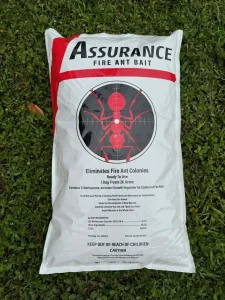
Fire Ant Control, LLC uses granular bait containing an insect growth regulator. Rather than functioning as a fast contact treatment, the bait is carried back to the queen. The active ingredient interrupts her reproductive cycle. As existing workers age out and fewer new ants replace them, the colony gradually declines.
The fact that this process takes time is actually important. If a treatment acts too quickly and affects foraging workers before they return to the nest, those ants cannot carry the bait back to the rest of the colony.
Broadcast Treatment Can Cover More Ground
Treating one mound at a time may seem manageable when there is only an isolated problem. It becomes far less practical when fire ants are scattered throughout a lawn, farm, athletic field, HOA, golf course, park, or commercial property.
Broadcast treatment distributes a measured amount of bait throughout the area where fire ants are likely to forage. Workers from multiple colonies can then encounter the bait and carry it underground.
There is another advantage: not every colony has an obvious mound.
By treating the larger area rather than relying entirely on visible mounds, property owners can address fire ant activity they may not have noticed yet. This is particularly useful on large properties where searching for every individual colony would take considerable time.
Proper Timing and Application Matter
Even a quality fire ant bait needs to be applied correctly.
Fire ants should be actively foraging so workers can locate and collect the bait. The product also needs to be distributed at the appropriate application rate and as evenly as possible. Using more of the product than recommended does not automatically produce better results.
Weather can affect applications as well. Heavy rain around the time of treatment can interfere with bait, while certain weather conditions may reduce how actively ants forage.
Professional treatment removes much of the guesswork surrounding application rates, coverage and timing.
Ongoing Control Is Part of the Process
Fire ant treatment should not be viewed as something that permanently prevents another ant from appearing on the property.
New queens can fly into an area and establish colonies. Fire ants can also migrate from neighboring land. In addition, bait does not remain on the property indefinitely. Existing ants consume it, and eventually another treatment is needed.
Fire Ant Control recommends treatment approximately every four months, or three times per year. Staying on a regular schedule makes it easier to maintain control of fire ant activity rather than waiting until numerous new mounds have already appeared.
When Professional Fire Ant Control Makes Sense
DIY products may be practical in certain situations, particularly on a small property with limited activity. Recurring infestations and larger properties are another matter.
Successful treatment depends on using an appropriate bait, applying it at the correct rate, reaching the full treatment area and following up regularly.
Fire Ant Control, LLC specializes specifically in fire ant treatment for residential, commercial, agricultural, recreational and other outdoor properties. Licensed technicians use regulated granular bait and application methods designed to target colonies rather than simply treating the ants visible above ground.
When comparing effective methods to control fire ants, look beyond what happens to the mound today. Queen-targeting granular bait, proper coverage, thoughtful timing and recurring treatment provide a more complete approach to maintaining control over time. If fire ants are becoming a problem on your property, contact Fire Ant Control, LLC at 239-312-8200 or online to request a treatment and learn more about establishing a regular fire ant control schedule.