
Fire Ant Control Methods That Are Safe Around Pets
Dogs sniff the grass. Cats explore patios and landscaped areas. Horses, livestock and other animals spend hours outdoors. When fire ants move into those same spaces, pet owners understandably want a treatment that controls the problem without creating another concern. Fire ant control methods that are safe around pets should combine effective colony management with products that are approved for use around animals when applied properly. The treatment method, application rate and way the product is handled all matter.
Fire Ants Are a Risk to Pets, Too
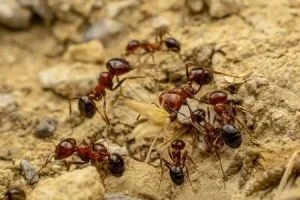
Fire ants do not reserve their aggressive behavior for people. A curious dog can step onto a mound while exploring the yard, and an animal lying in the grass may be attacked before it has time to move away.
Pets are particularly vulnerable around their paws, nose, mouth and other areas with less protective fur. Animals that are very young, elderly, confined or unable to move quickly can face an even greater risk when a colony is nearby.
That makes controlling fire ants an important part of maintaining outdoor areas where pets regularly spend time.
Be Careful With DIY Fire Ant Remedies
When a mound appears in the backyard, the quickest response may seem to be grabbing a spray, pouring something into the nest or trying a homemade remedy.
The problem is that not every fire ant treatment is appropriate for areas used by pets.
Any pesticide should be used according to its label, including directions covering where and how it can be applied. Applying extra products, combining products without directions to do so or using household substances in ways they were never intended to be used can create unnecessary risks.
There is another issue. A fast contact treatment may affect ants near the surface but fail to reach the reproductive center of the colony. That can leave the homeowner repeatedly treating new activity.
Granular Bait Uses Fire Ant Behavior
Fire Ant Control, LLC takes a different approach. The company uses granular bait containing an insect growth regulator, or IGR.
Instead of spraying ants as they appear, the bait is distributed in areas where fire ants forage. Worker ants discover the food-like granules and carry them back to the colony. The IGR then interferes with the queen’s ability to continue producing replacement workers.
As the existing population naturally ages out, the colony declines.
This slower process is intentional. The workers need enough time to find the bait and transport it underground before the treatment can affect the colony.
What Does “Safe Around Pets” Mean?
This is an important distinction. Pet-safe fire ant control should not mean that a pesticide can be used carelessly or that pets should intentionally come into contact with the product. It means choosing a product approved for the intended setting and following the label and application instructions.
Fire Ant Control uses regulated bait approved for application around people and animals. When your property is treated by Fire Ant Control and the product is applied as directed, the treatment is safe for use around pets.
The product label still matters. It directs users to avoid contact with the granules and includes specific requirements for application and handling.
Professional treatment helps ensure the bait is applied at the proper rate and in accordance with those directions rather than being scattered excessively around the yard.
Broadcast Treatment Can Cover the Places Pets Use
A dog does not stay beside the one fire ant mound you happened to notice. Pets may roam the entire lawn, investigate fence lines, play around landscaping or rest in different areas throughout the day.
Broadcast applications can address fire ant activity across the broader property instead of treating only individual visible mounds.
Workers from colonies throughout the treated area have an opportunity to encounter the bait while foraging and carry it underground. This approach can also reach colonies that have not produced an obvious mound.
It is useful for residential yards as well as farms, kennels, barns, pastures and other properties where animals spend significant time outdoors.
Ongoing Treatment Helps Maintain Control
Even after existing colonies are brought under control, new fire ants can move onto the property. Winged queens can establish new colonies, and ants may migrate from neighboring land.
For a household with pets, waiting until large mounds reappear means animals may once again be sharing the yard with active colonies.
Fire Ant Control recommends recurring treatment to stay ahead of new activity. Regular applications help maintain control without relying on a cycle of finding a mound, treating it and waiting for the next one to appear.
Choosing fire ant control methods that are safe around pets means considering more than whether a product controls ants. Proper application, label compliance, and a treatment strategy designed to reach the colony all matter. Fire Ant Control, LLC provides professionally applied granular bait for homes, farms, and other properties where animals are present. Call 239-312-8200 or reach out online to schedule fire ant treatment and learn more about maintaining control while keeping your pets’ outdoor spaces in mind.