
How to Get Rid of Fire Ant Mounds in Ruskin, Florida
Trying to figure out how to get rid of fire ant mounds in Ruskin, Florida can be frustrating, especially when you think you handled one only to find another mound a few days later. That happens because the pile of loose soil in the yard is only the most visible part of a much larger colony below ground.
Flattening the mound may make it disappear temporarily, but it does not necessarily do much to the ants living underneath it. For better results, fire ant control needs to address the colony rather than just the dirt you can see.
A Fire Ant Mound Is Only the Beginning
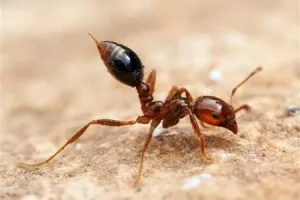
When people spot a mound, the natural response is to deal with that exact spot. Some mow over it. Others kick it apart or try a product intended for individual mound treatment.
The problem is that most of the colony is underground.
Worker ants move through tunnels beneath the soil, leaving the colony to search for food and returning again. The queen remains protected below the surface, where she continues producing new ants.
So, while destroying a mound might make the yard look better for a short time, the colony may still be active. The ants can rebuild, create another mound nearby, or continue functioning without a large mound being visible at all.
That is one reason professional fire ant control focuses on more than what can be seen from the surface.
Why Do Mounds Suddenly Show Up After Rain?
Many Florida homeowners have had the same experience. The yard looks fine, it rains, and suddenly several fire ant mounds seem to appear at once.
The ants did not necessarily arrive overnight.
Moisture can change conditions in the soil and make mound-building activity much easier to notice. Fresh soil brought to the surface can turn a previously inconspicuous colony into an obvious problem.
In Ruskin, the warm climate also gives fire ants plenty of opportunity to remain active throughout much of the year. Colonies may develop in open lawns, beside landscaping, along fences, near outbuildings, or in sections of acreage that people rarely walk through.
That means the mound you find first may not be the only colony on the property.
Treating One Mound at a Time Can Turn Into a Routine
There is nothing unusual about starting with spot treatment. You see a mound by the driveway and treat it.
Then you find another one near the back fence. A few days later, there was one beside the shed.
Before long, you are spending more time looking for fire ant mounds than actually enjoying the yard.
This is where a broader treatment approach makes sense. Instead of relying entirely on finding each individual colony, fire ant control can address activity across the treated area. It is particularly helpful on larger properties where checking every corner of the lawn, pasture, or acreage simply is not practical.
Why Does the Fire Ant Queen Matter?
Fire ant control is not just about the workers crawling across the ground.
Workers are the ants people notice most often because they leave the colony to forage. They are also the ones that rush out when a mound is disturbed. However, reducing the number of workers on the surface does not necessarily stop the colony from continuing.
The queen is responsible for producing new ants. As long as reproduction continues, the colony has a way to replace workers that die.
Fire Ant Control uses an approach designed to interfere with that reproductive cycle. Rather than judging success solely by how quickly visible ants disappear, the focus is on controlling what is happening inside the colony.
That process can take time. With careful, regular treatment, active fire ant infestations can be controlled. It is important to remember, though, that this does not mean fire ants will never return. New colonies can move into or develop on a property later.
Check More Than the Middle of the Yard
Fire ants have no reason to build their mounds where they are easy for you to find.
Some colonies develop in obvious places, while others may be tucked along a property line, behind landscaping, or in a section of grass that gets very little foot traffic.
Areas worth watching include:
- Fence lines and property edges
- Flower beds and landscaped areas
- Open fields and pastures
- Around sheds and other outbuildings
- Near patios and walkways
- Grassy areas around play equipment
- Sections of the property that are rarely used
Finding these mounds before someone accidentally steps near them can be difficult, particularly on acreage.
A person working in the yard might disturb one while pulling weeds. A child can run across a mound without seeing it. Dogs and other animals may walk directly through an active area while exploring.
Taking a more complete look at the property helps reduce the need to discover each colony by accident.
Regular Treatment Helps You Stay Ahead of New Colonies
Fire ants are not likely to stay on one side of a fence just because the neighboring property has been treated.
New activity can appear even after existing colonies have been successfully controlled. Fire ants from nearby areas can move in, and winged reproductive ants can establish new colonies.
For that reason, fire ant management works best as an ongoing process.
Regular treatment, monitoring, and communication help property owners respond to new activity before the yard becomes dotted with mounds again. This is especially useful on larger Ruskin properties where checking every section of the grounds on a regular basis would be difficult.
It also changes the way you deal with the problem. Instead of waiting for a mound to become large enough to notice, you are working to maintain control across the property.
Don’t Let Visible Mounds Tell the Whole Story
One mound does not always mean one colony, and a yard without obvious mounds is not necessarily a yard without fire ants.
If you keep finding fire ant activity in different places, treating each mound individually can become time-consuming. It can also leave you continually reacting to what has already appeared instead of managing the property as a whole.
Fire Ant Control provides fire ant treatment for residential, commercial, agricultural, and other properties throughout Florida. Treatment can be tailored to the type and size of the property rather than focusing solely on the mounds that happen to be visible that day.
Get Fire Ant Control in Ruskin, Florida
Knowing how to get rid of fire ant mounds in Ruskin, Florida starts with understanding what is beneath them. The mound is only a sign of the colony below, and repeatedly knocking down or spot-treating visible mounds may leave the larger problem untouched.
Regular treatment and monitoring can help control existing fire ant activity while staying ahead of new colonies that develop over time. If fire ants are becoming a problem around your home, farm, acreage, or commercial property, contact Fire Ant Control. Call 239-312-8200 or reach out online to learn more about fire ant treatment in Ruskin.